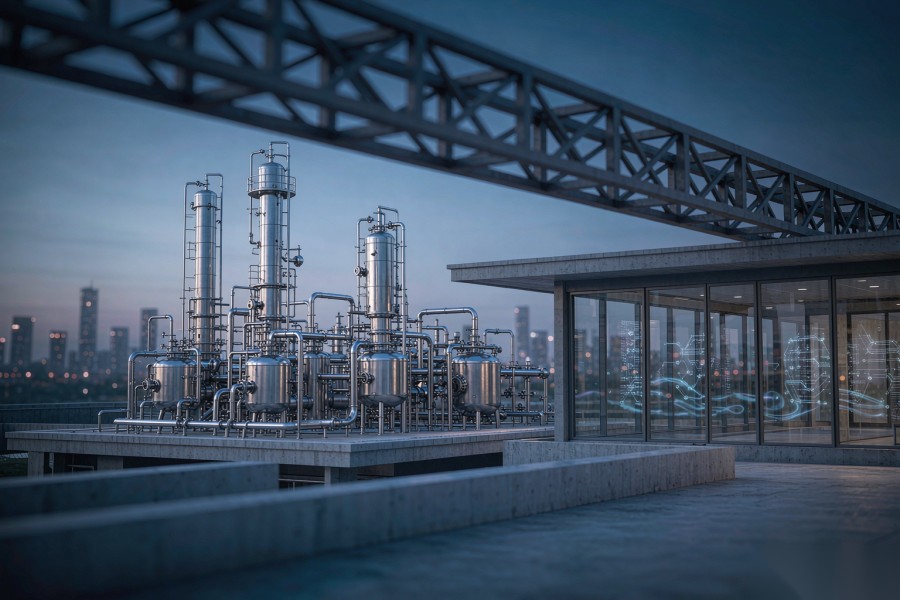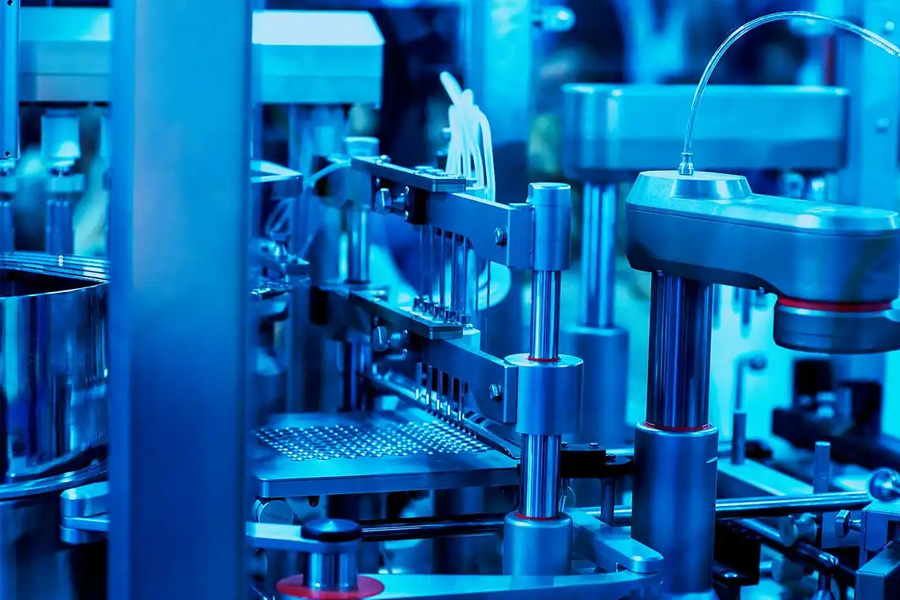
When people hear the term "chemical industry", they often picture factories billowing thick smoke with pungent odors. Yet few realize that fine chemical engineering permeates every corner of our daily lives. From facial cleansers and toners we use in the morning, to laundry detergents and kitchen dishwashing liquids, as well as automotive lubricants and electrolytes for mobile‑phone batteries — all rely heavily on fine‑chemical technologies.
What does the Fine Chemical Technology major, which cultivates these "unsung heroes behind daily comforts", actually teach and prepare students for? Real‑world cases will help you understand this practical and promising major.
I. Clarification: Fine Chemicals ≠ Traditional Chemicals — Focusing on Small‑batch, High‑value Premium Products
A common misconception needs correcting: fine‑chemical production is not the crude, large‑scale manufacturing of traditional chemical industries. Instead, it targets fields defined by small‑batch output, diverse product ranges, high purity and high added value. To put it simply, traditional chemical industries may churn out crude oil and steel by the ten‑thousand‑ton scale. Fine‑chemical processing takes these basic raw materials for further deep processing, yielding refined products measured in grams or kilograms. Examples include pharmaceutical intermediates worth hundreds of yuan per gram, and fragrance ingredients that lend long‑lasting scent to fabrics in tiny dosages.
Take sodium hyaluronate (hyaluronic acid), a moisturizing ingredient widely used in skincare products. Its production represents a typical fine‑chemical application. Technicians adopt microbial fermentation, rigorously controlling dozens of parameters including temperature, pH value and nutrient composition to drive strains to synthesize hyaluronic acid efficiently. Multiple sophisticated procedures such as purification, decolorization and drying follow, delivering final products with purity above 99%. Slight deviations in process parameters can trigger sharp yield drops or sub‑standard purity, which may trigger skin irritation or product failure in skincare goods.
Another example is insect repellents for summer use. Their active ingredients DEET or picaridin require sophisticated fine‑chemical synthesis. These molecules feature complex structures, demanding precise control over every reaction step to avoid impurity formation, as impurities may irritate human skin. One fine‑chemical enterprise once faced non‑compliant products caused by trace impurities in DEET. Engineers majoring in fine chemical technology solved the problem by adjusting reaction solvents and optimizing separation workflows, enabling the product to launch successfully.
II. Core Curriculum: From Laboratory to Production Lines — Combining Chemical Expertise with Hands‑on Competence
Contrary to the stereotype that this major only focuses on chemical equations, it integrates theories with heavy practical training. Students must master both underlying principles and hands‑on operational skills. Core courses revolve around manufacturing qualified fine‑chemical goods, divided into three modules:
1. Fundamental Chemistry: Building the Foundation for Formulation Design
Courses including Inorganic Chemistry, Organic Chemistry and Analytical Chemistry lay essential theoretical groundwork. Just as cake‑making requires familiarity with flour and egg properties, fine‑chemical development demands thorough understanding of chemical substance characteristics. Organic chemistry lectures cover surfactant molecular structures, for instance. Surfactant molecules possess oil‑attracting and water‑attracting ends, wrapping grease particles to remove stains — this principle explains how laundry detergents work. Such theoretical knowledge underpins rational formulation development.
2. Specialized Technologies: Mastering Production Know‑how
Major courses cover Fine Chemical Technology, Cosmetic Manufacturing Technology, Synthesis of Pharmaceutical Intermediates, Coatings and Adhesive Technology, etc., teaching process workflows for specific commodities. Cosmetic Manufacturing Technology elaborates on emulsification procedures for cream‑based skincare products, specifying oil‑water phase ratios, stirring speed and temperature parameters to obtain stable, non‑delaminated emulsions.
Vocational colleges run practical training projects for fine‑chemical majors, such as hand‑cream development by student groups. One group obtained delaminated hand cream after one‑day storage because they only heated materials to 65 ℃ instead of the required 75 ℃ for emulsification. Another group followed process specifications strictly and produced fine‑textured hand cream whose moisturizing performance passed lab tests. This case demonstrates the significance of practical training in specialized courses.
3. Equipment Operation: Mastering Precision Instruments
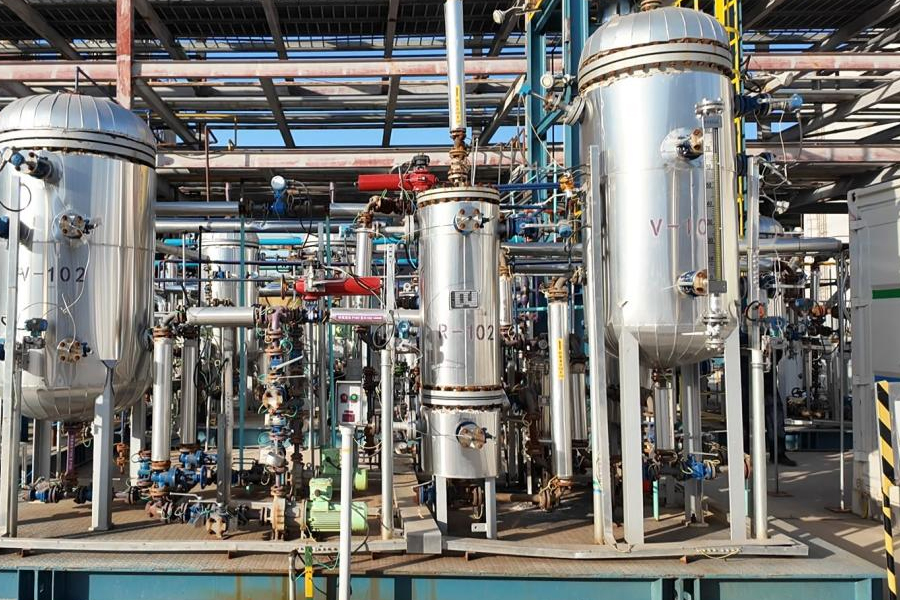
Fine‑chemical manufacturing depends on precision equipment. Courses such as Chemical Unit Operations and Fine‑chemical Equipment teach students to operate reaction kettles, rectification towers, high‑performance liquid chromatography (HPLC) devices and other apparatus. HPLC serves as a "product health check": samples are injected into the instrument, and chromatograms detect impurities and verify product purity — a critical quality‑assurance step.
During lab training, one student detected an abnormal chromatogram peak indicating impurities in fragrance samples. Initially suspecting instrument malfunction, the student reviewed knowledge from Instrumental Analysis, identified insufficient filtration in sample pre‑treatment as the root cause, and obtained accurate purity readings. This highlights the value of combining theoretical understanding with practical operation.